

Petrified wood
4 petrifactions you can see here on our „Wall of the Senses“. Amber, which is petrified resin, and three petrified wooden pieces.
But what is „petrify“?
Wood can petrify. A petrified wood is fossil wood whose components have been transformed by the process of silification (incorporation of silica under pressure and deprivation of oxygen) and thus preserved. Individual parts of fossil wood are called dendrolite or petrified wood or petrified tree.
Here you can learn more about the evolutionary history of trees and how long trees have existed.
Our Exhibits
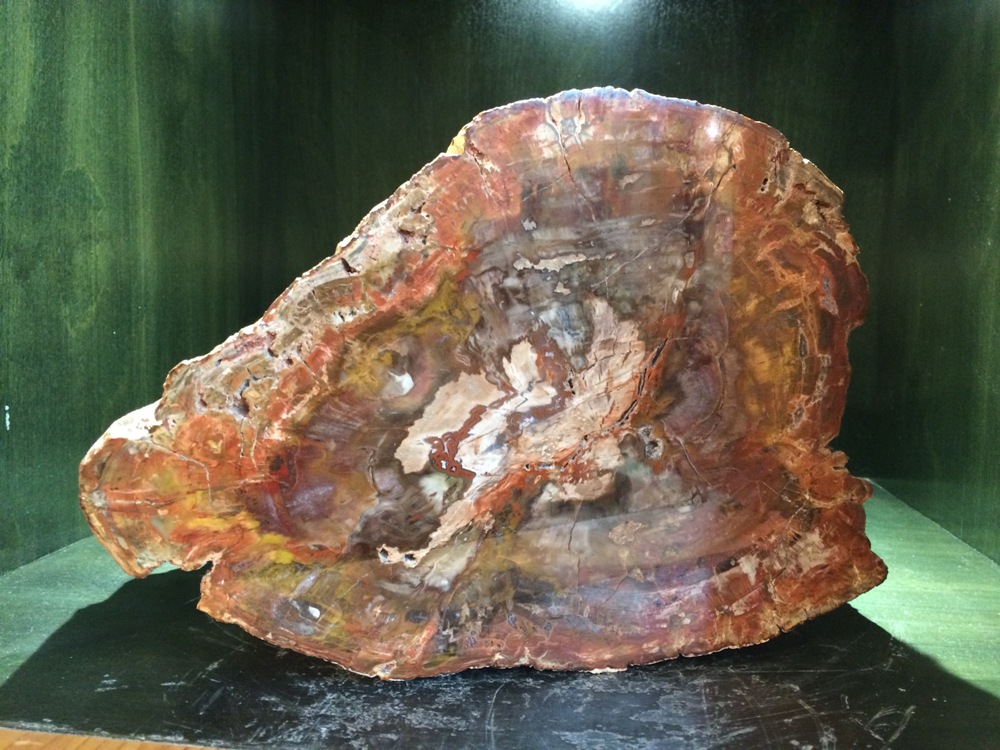
The polished side of the fossilized tree, which grew in Madagascar about 210 million years ago, gleams like reddish marble.
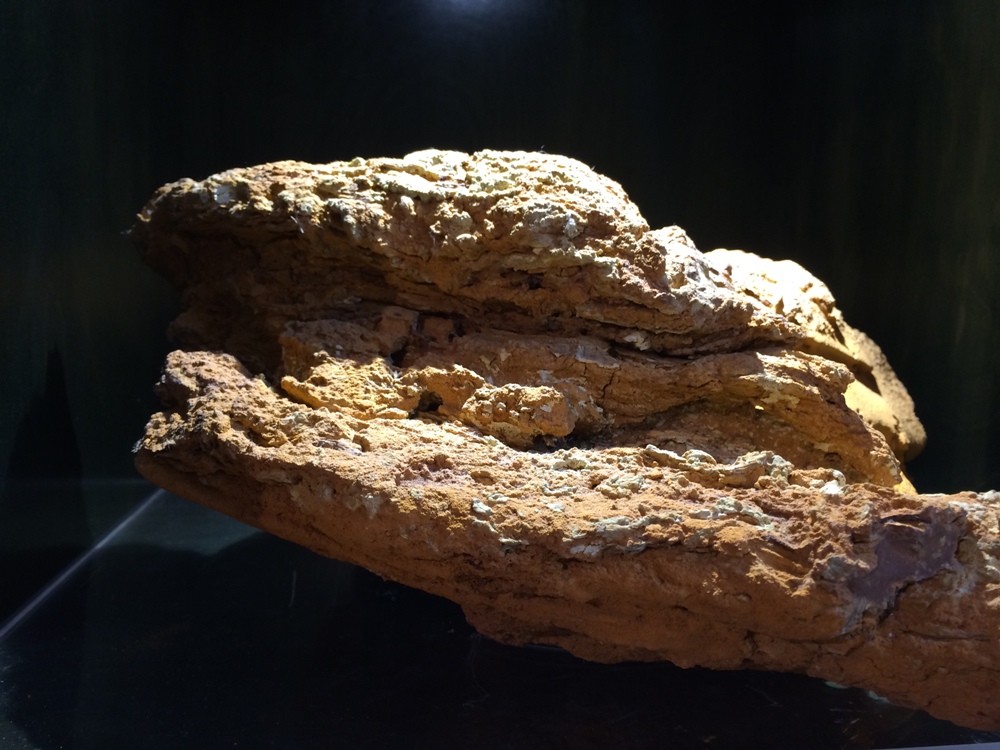
Petrified wood from Geiersberg, from the Hötzinger Collection
Floodplain and swamp forests once covered the stretch of land that the Pram River flows through today. In them tree species that we still know today were represented : Maple, Beech, Poplar and Elm. It was 10 million years ago, in the Tertiary period, that one of these trees fell, became preserved in the mud and was covered more and more by sediments.
A passionate collector (August Hötzinger) of fossils and minerals has recovered a piece of this tree, in the millions of years it had turned to stone. It was a deciduous tree, as a thin section under the microscope shows.
Most of the petrified woods were formed by silicification processes. After the woods are covered by thick sediment layers, a complicated process begins in which first the cavities and finally also the cell walls are filled by silica gel. Over time, the organic matter is replaced by dissolved minerals such as calcium carbonate or silica. Deep underground, the wood fossilizes.
In recent geological times, wind and water have eroded the top layers and exposed the ancient piece of wood. It is now a testimony to the vegetation of a time long past and an example of the fascinating development and transformation phases of wood as a natural material.
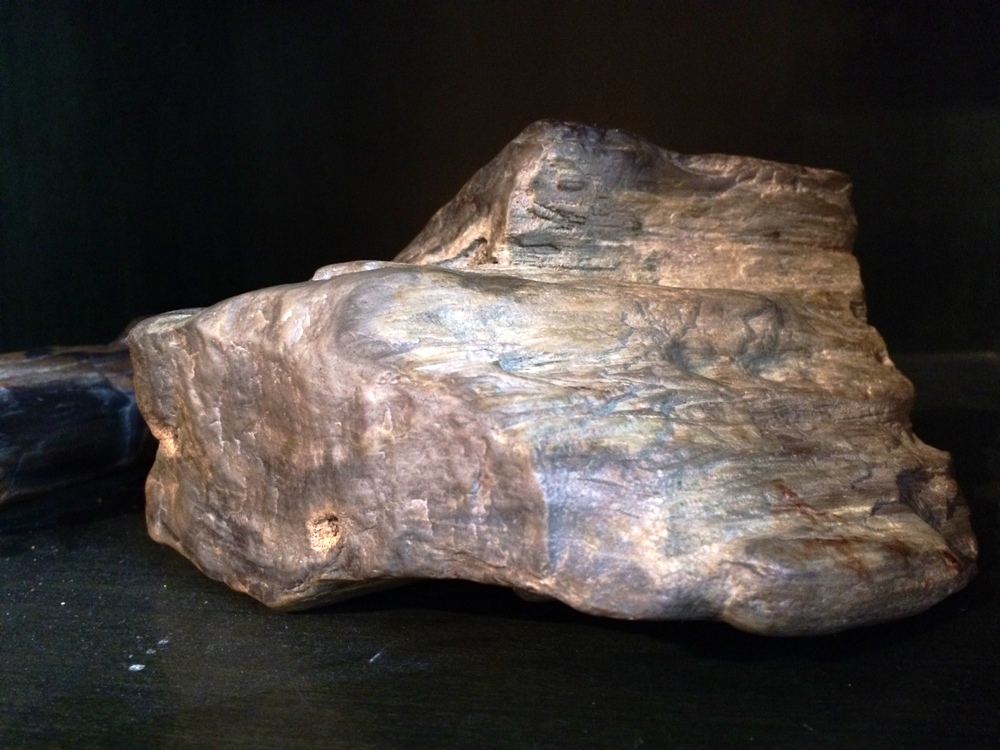
Silicified wood, loan Wilhelm Rager Place of discovery: Otterbach /Schärding
Sources: Jasmin Beer M. A. in: Martin Ortmeier und Cornelia Schlosser (Hrsg.): „Mei liabstes Stück“, Katalog zur Wanderausstellung 2012 + 2013 im Rott- und Pramtal.
WIKIPEDIA.