

Amber
Resin, that sticky substance with which trees seal their wounds to protect themselves from invading germs and fungi, became stone. The only stone that burns. This was already recognized by the Vikings, so they called it „Brennstein“(burning stone). The German name comes from this – Brennstein – Bernstein. The English name amber comes from the Arabian word anbar = amber.
Amber with its warm golden colors (very rarely other colors like green) catches the light and is beautiful to look at. It is often used for jewelry, it was already an important commodity in the Stone Age. Amber jewelry was made in Egypt over 6,000 years ago. Cultic forces were always attributed to it. Even today, many parents of teething children swear by the positive effects of a necklace made of amber.
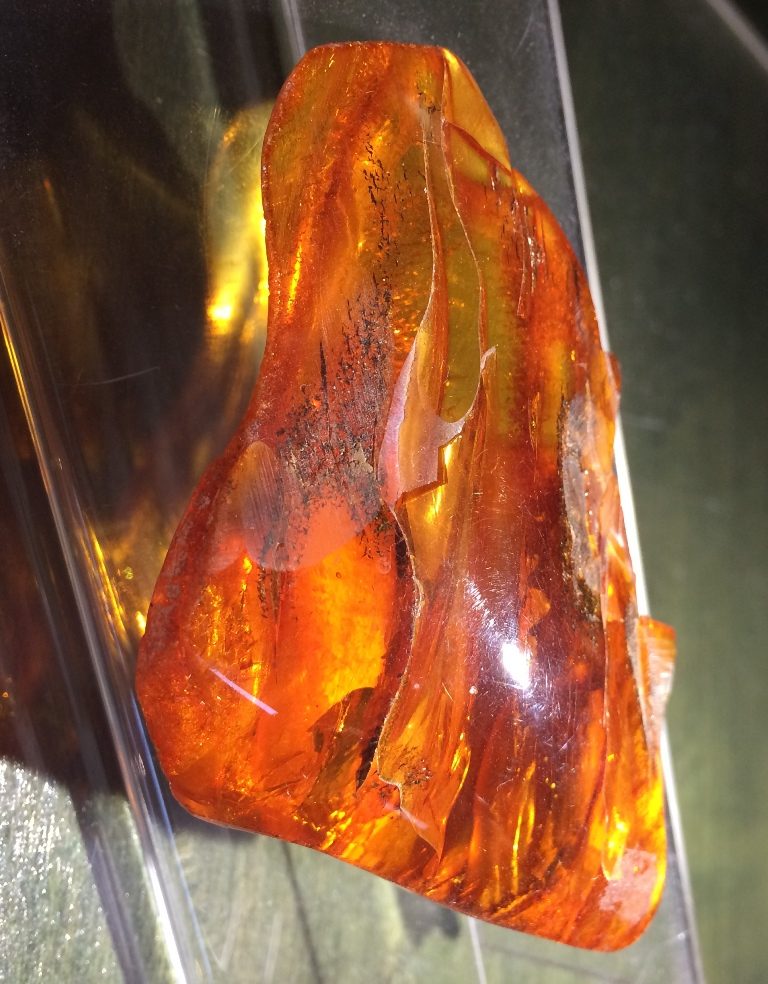
Succinic acid strengthens the immune system, healing powers have been proven. Similar healing powers to the „source product“ resin.
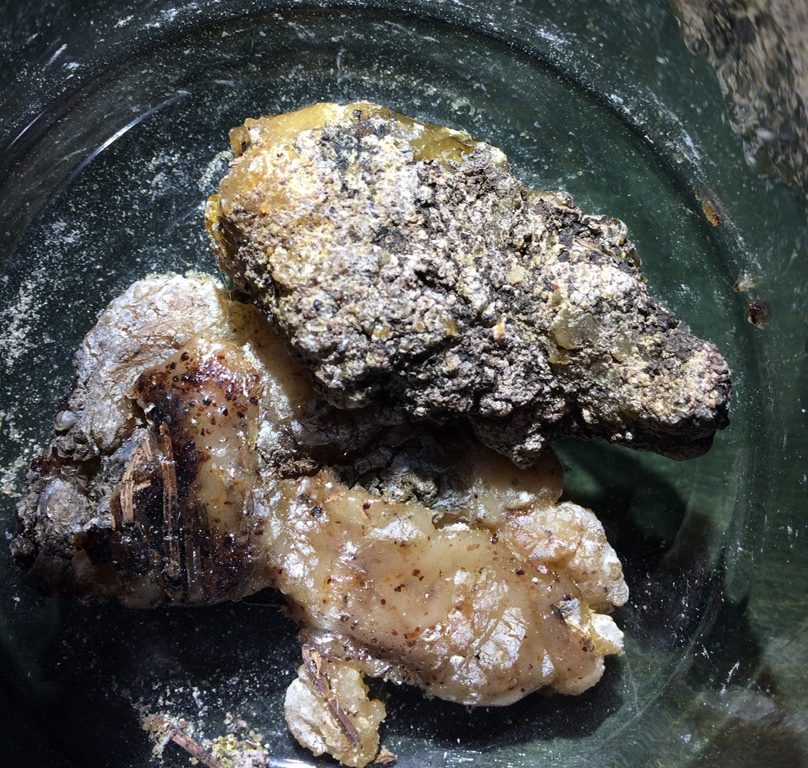
Spruce resin
Rubbing creates a strong electrostatic charge, the ancient Greeks called amber „electron“.
Amber is usually between 1 and 300 million years old. Therefore we cannot say exactly how old our exhibits are.
Resin
When the bark and wood are injured, a tree protects itself with a sticky substane, called resin. To be accurate we differentiate between resin from confers and gum resin from deciduous trees. (First chewing gums in history were made from gum resin). Resin can kill many bacteria, viruses and fungi. Resin has an extremely viscous consistency. For example, a healthy spruce protects itself from invading bark beetles by literally sticking the insects with resin. Resin has antiseptic, anti-inflammatory and wound-healing properties, also for humans and animals, and has thus been one of the most important components of naturopathy for thousands of years. In particular in „pitch balms“ or “ dragging balms“ or also dried as incense.
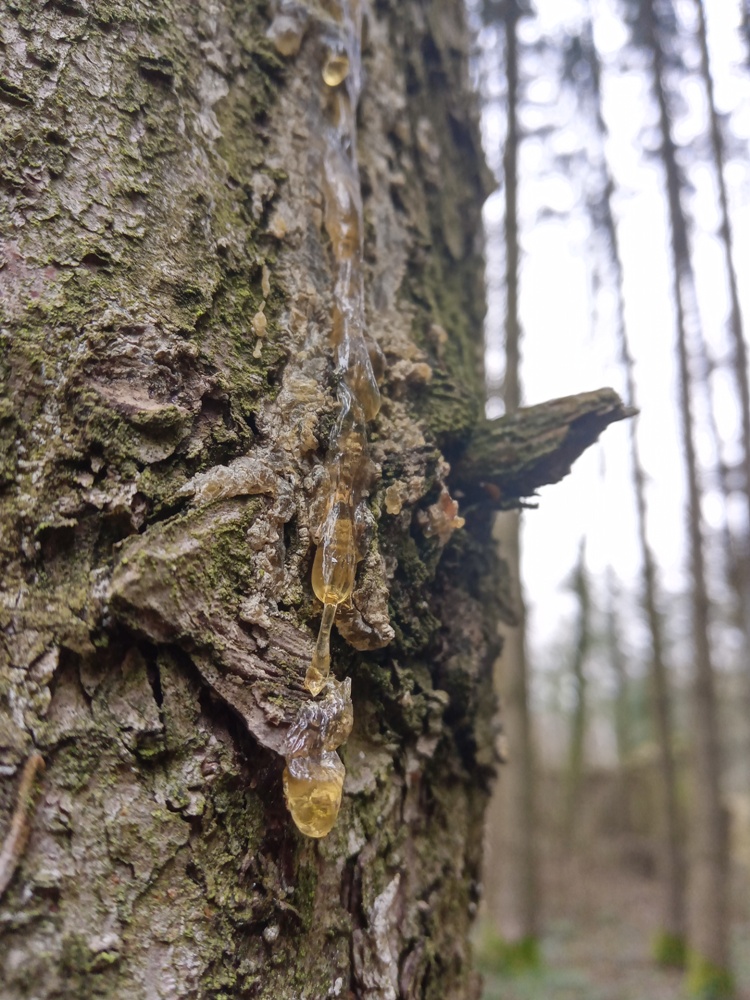
Spruce with resin drops.
Source: Maximilian Moser & Erwin Thoma: „Die sanfte Medizin der Bäume. Gesund leben mit altem und neuem Wissen.“ Servus 2017.