

Carving bench („Hoanzlbank“, „spoke shaver“)
This device has many names: from Schnitzbock to Reifbank to Eselsbank and many more. The variant common in Upper Austria and Styria „Hoanzlbånk“ may come from the old dialect word for foal „Hëssl“ (English horse). The user sits on the „back“ of the device as if on a small horse. There are four legs and the little head turns back to the rider.
„The Hoanzlbånk is known in almost all of Europe, in English-speaking countries it is called „spoke shaver“.
What do you call this kind of carving bench?
The Hoanzlbånk is simple and practical: within seconds a workpiece can be locked in place and held with the foot lever. This leaves both hands free to work. The Hoanzlbånk was widespread: from the barrel binder (see the historical picture postcard below), wainwright, wooden shoemaker to wooden shingle maker … almost every wood craft had one, often slightly adapted version in construction to the specific requirements. It was also found on every farm.
Every child is told to work away from the body when it comes to tasks incoparating sharp blads. At the Hoanzlbånk one must work towards the body. To avoid accidents, a leather apron was worn, the „Virchta“ (= front cloth). It slowed down the momentum in the event of a bounce of the tool and thus protected against injury.
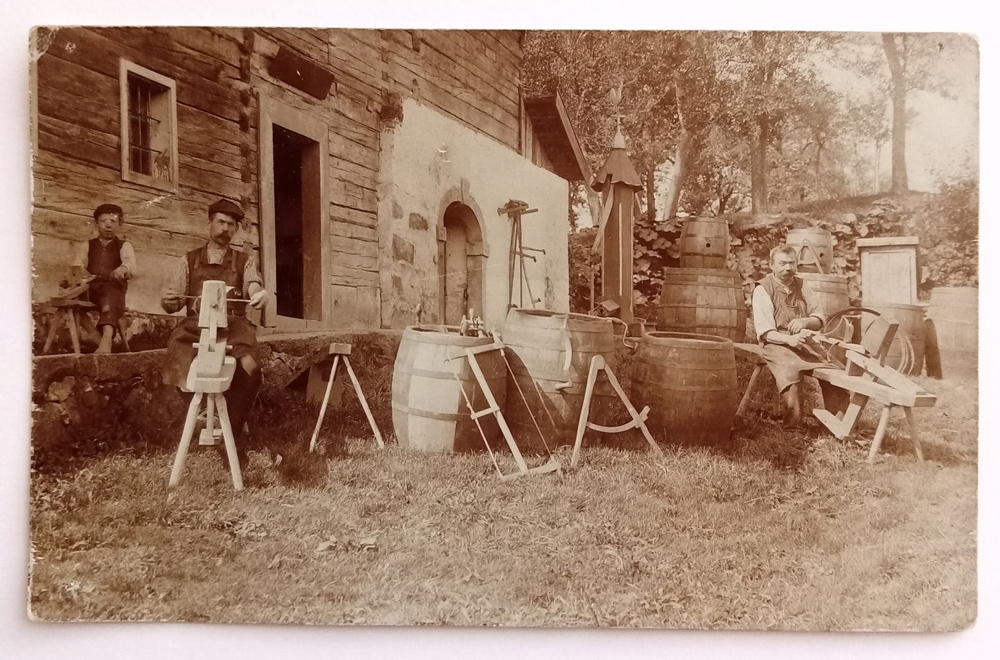
Historical postcard: barrel binder
There were even hoanzl benches for children (left), so they could become familiar with working at the hoanzl bench at a young age.
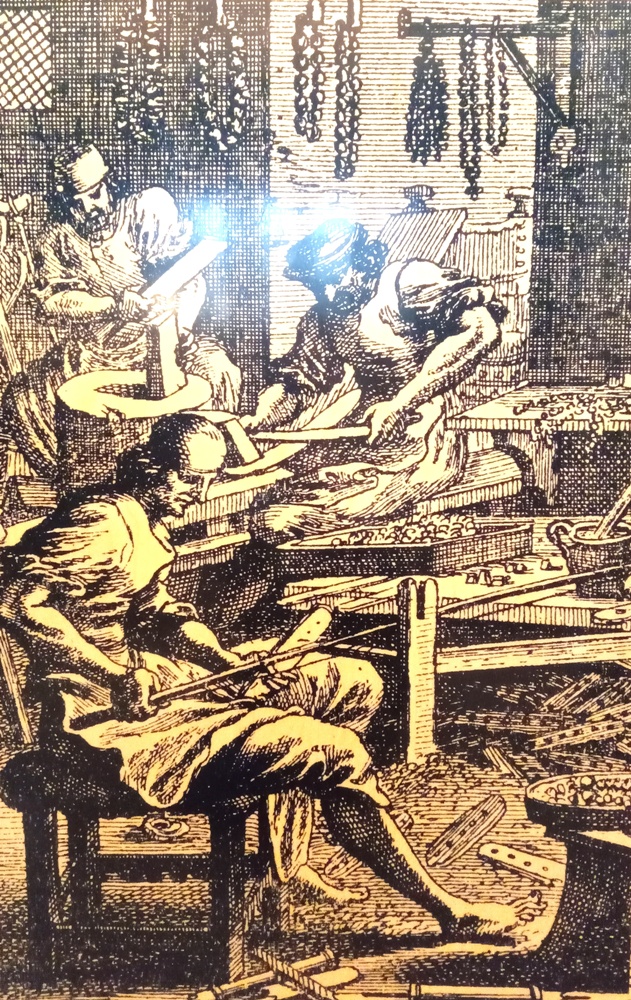
Our illustration of the rosary maker on the display for the historic woodworking trades also shows work at the hoanzl or carving bench.